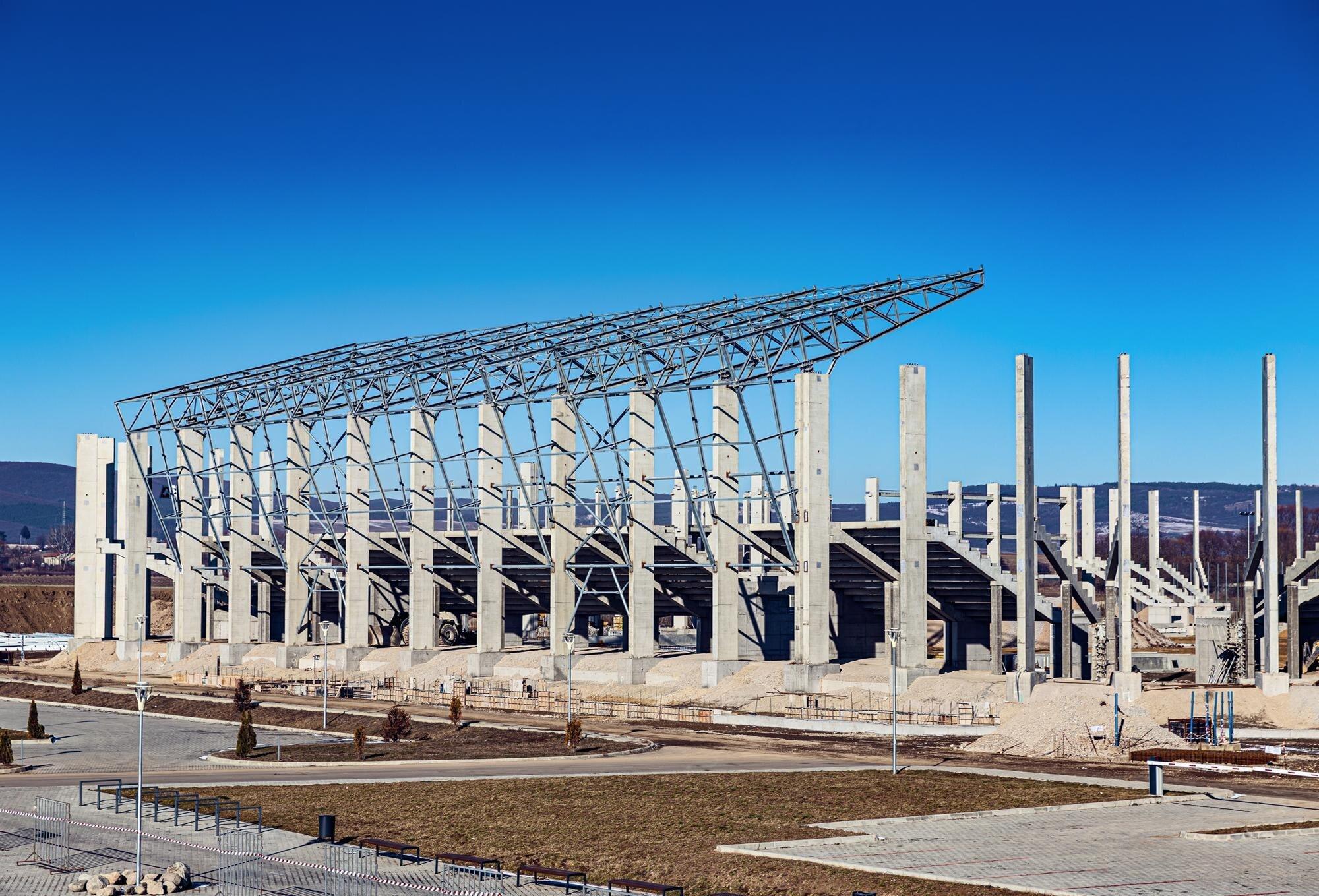
Fast-Build Steel Structures in Canada

Fast-Build Steel Structures in Canada: How Fast Is Fast?

Fast-Build Steel Structures in Canada: How Fast Is Fast?

Speed is one of the first reasons people look at steel for a new build. But “fast” means different things depending on the size of the project, the time of year, and how well the work is planned in advance. 

Here is an honest look at how quickly fast-build steel structures in Canada can actually go up — and what determines the real timeline.

Why Are Steel Structures Considered Fast to Build?

The speed advantage of steel starts well before any component reaches the job site. Steel framing is manufactured in a factory to precise specifications. When it arrives, it is ready to install. There is no on-site cutting to fit, no sorting through inconsistent material, and no improvisation required.

Wood framing, by contrast, requires constant hands-on adjustment at every stage. Pieces vary in dimension and moisture content. Steel eliminates most of that friction, which is why the framing phase of a steel build consistently moves faster than comparable wood construction.

How Long Does Steel Frame Erection Actually Take?

For a small structure under 10,000 square feet — a workshop, storage unit, or small commercial space — framing can be completed in as little as five to eight weeks once the foundation is ready. Medium-sized buildings around 10,000 square feet typically take approximately eight weeks for the erection phase. Larger or more complex projects may run several months depending on engineering requirements and site conditions.

The erection phase itself is often just days to a couple of weeks. The broader project timeline — from first planning call to occupancy — typically runs six to nine months for most permanent steel buildings in Canada, covering design, engineering, permits, fabrication, delivery, and construction.

Does Canada’s Housing Push Make Fast Steel Construction More Relevant?

Absolutely. The federal government has been clear about the urgency of building more homes, faster. Build Canada Homes, the federal agency launched to accelerate housing supply, has specifically prioritised modular and factory-built construction methods to cut costs and speed up delivery. 

Fast-build steel structures in Canada fit directly into that national direction. Prefabricated steel components are manufactured off-site and assembled quickly on location — exactly the kind of approach the federal government is backing.

What Determines Whether a Steel Build Stays on Schedule?

This is where most projects either succeed or run into trouble. The steel frame itself rarely causes delays. What causes delays is everything that needs to be in place before erection begins.

Permits and municipal approvals take time, and the process varies by province and municipality. Foundation work must be completed and inspected before any frame goes up. In Canada, frost depth varies significantly by region — from roughly five to six feet in Calgary to a fraction of that in coastal British Columbia — and foundation design has to account for local conditions precisely.

Weather also plays a role. Steel erection itself handles cold weather well, since it does not rely on moisture-dependent processes. Foundation pours, however, require careful cold-weather management to avoid compromising concrete strength.

Fast-build steel structures in Canada deliver their speed advantage most reliably when permitting, site preparation, and fabrication are coordinated in parallel rather than sequentially.

How Does Prefabrication Improve Speed on Site?

When components are pre-drilled, pre-cut, and engineered to fit together exactly, on-site labour is dramatically reduced. There is less measuring, less waste, and far fewer unexpected corrections. Trades who follow the framing crew — electricians, plumbers, mechanical contractors — find their work more straightforward because the structure is dimensionally consistent throughout.

That predictability has a value beyond speed. It reduces the risk of costly on-site changes and keeps the overall project closer to the original budget.

Where Can You Get Fast-Build Steel Structures in Canada?

If your project has a firm timeline and you need a framing system that is engineered, manufactured, and ready to go, DestNest manufactures fast-build steel structures in Canada for residential, commercial, and light industrial applications. Every component is produced with precision and backed by proper engineering documentation.
Sustainable Steel Building Systems in Canada: Cost vs Savings

Steel has a reputation for being a strong material. What is talked about less is how well it performs as a financial decision. Sustainable steel building systems in Canada are attracting serious attention from developers, homeowners, and commercial builders — not just because they are better for the environment, but because the numbers make sense over time.

What Are Sustainable Steel Building Systems?

Sustainable steel building systems use cold-formed or structural steel as the primary framing material, engineered and manufactured to reduce waste, support energy efficiency, and last for decades with minimal upkeep. Components are precision-manufactured off-site and assembled on location, which cuts down on construction waste and shortens project timelines. Steel carries a high recycled content percentage — often between 25% and 90% — and is fully recyclable at the end of its life, which closes the loop on material use.

Why Is the Canadian Government Encouraging Low-Carbon Steel Construction?

The federal government is actively pushing construction toward lower-carbon materials. The Canada Green Buildings Strategy, published by Natural Resources Canada, commits to a “Buy Clean” approach that promotes low-emission steel, recycled materials, and energy-efficient design in federally funded construction. The strategy is tied to Canada’s goal of cutting greenhouse gas emissions by at least 40% below 2005 levels by 2030.

For builders and property owners, this policy direction translates into growing demand for steel-framed construction that aligns with LEED and Zero Carbon Building standards — which in turn supports long-term asset value.

What Does It Cost to Build with Sustainable Steel in Canada?

Upfront, sustainable steel building systems in Canada are competitively priced against wood and concrete. The cost savings begin early, because prefabricated components arrive ready to install, reducing labour hours on site. There are fewer weather delays too, since most fabrication happens indoors under controlled conditions.

The real cost advantage, though, is in the long run. Steel does not rot, warp, split, or attract insects. That means far lower maintenance and repair costs over the building’s life. A steel-framed structure does not require the ongoing remediation work that wood-framed buildings in humid or cold climates often do.

How Much Can You Save on Energy With a Steel Building?

This is where sustainable steel building systems in Canada show a measurable edge. Steel framing supports high-performance insulation across walls, roofs, and floors. A well-insulated steel building can reduce annual heating and cooling costs by 30% to 40% compared to a conventionally built structure, depending on its size and location.

Canada’s winters are long and expensive to heat. A building that holds temperature efficiently costs less to run every single month. Over a 20 or 30-year lifespan, those monthly savings add up to a very significant figure.

Steel frames also support the addition of solar panels and green roofing systems without structural modification. For owners who want to take energy efficiency further, the frame is already built for it.

Does Steel Construction Support Green Building Certification?

Yes. Sustainable steel building systems in Canada are well-suited to LEED certification, which evaluates a building’s performance across energy efficiency, materials selection, water use, and indoor environmental quality. Using steel with verified recycled content, combined with efficient insulation and low-waste construction practices, contributes directly to a stronger LEED score.

LEED-certified buildings carry tangible financial benefits: lower operating costs, higher resale values, and in many cases, access to federal and provincial incentive programmes.

Where Can You Find Sustainable Steel Building Systems in Canada?

If you are planning a residential or commercial project and want a system that delivers on both sustainability and long-term value, DestNest designs and manufactures sustainable steel building systems in Canada for a wide range of project types. Their systems are engineered to current code, built with precision, and designed for the demands of the Canadian climate.

The cost of a steel building is not just what you pay to put it up. It is what you save for every year it stands.

Steel Roof Truss Installation in Canada: What You Need to Know Before You Build

A roof truss does more than hold up your roof. It distributes the entire load of snow, wind, and dead weight across the structure below. Get it right, and the building performs for decades. Get it wrong, and you are looking at costly fixes or, in serious cases, structural failure. That is why working with a qualified steel roof truss manufacturer in Canada matters from the very first step.

What Is a Steel Roof Truss and Why Is It Used in Canada?

A steel roof truss is a pre-engineered triangular framework made from cold-formed steel sections. The triangular geometry distributes loads efficiently, which allows trusses to span large distances without needing interior support walls beneath them.

Steel is the right material for Canadian conditions. It does not rot, warp, or absorb moisture. It holds its dimensions through freeze-thaw cycles, heavy snow seasons, and summer heat swings. For builders working in regions where snow loads are significant, steel simply holds up better over time.

How Do You Prepare a Site for Steel Roof Truss Installation?

Preparation is what separates a smooth install from a costly one. Before any truss is lifted into position, the bearing walls or top plates must be level, straight, and built to carry the correct roof loads. Any deviation in wall framing will transfer directly into the truss system.

Inspect every truss on delivery. Check for any shipping damage and report it immediately. Never attempt a site repair without written approval from the manufacturer. Trusses should be stored flat, off the ground, on level supports to prevent distortion before installation begins.

What Are the Key Steps to Installing Steel Roof Trusses?

A steel roof truss manufacturer in Canada will supply engineered drawings with your order. Follow them precisely. Here is the general installation sequence:

The first truss goes up and must be braced substantially to the ground or wall before any others are set. Every truss that follows relies on that first one for stability, so it has to be anchored well.

Each additional truss is lifted into position, spaced at the intervals specified in your drawings. In residential construction, spacing is typically 600 mm (24 inches) on centre, though this varies with load requirements. Trusses are then fixed to the top plates and temporarily braced.

Three planes require bracing: the top chord, the web member plane, and the bottom chord. Temporary bracing must be fully in place before anyone steps onto the roof. Permanent lateral bracing follows immediately after each section is set and plumbed.

Do not cut, notch, or alter any truss on site. The geometry of a truss is precisely engineered, and any modification changes how it carries load.

How Do Canadian Snow and Wind Loads Affect Truss Design?

This is where working with a local steel roof truss manufacturer in Canada becomes essential. The National Building Code of Canada, published by the National Research Council, sets out specific requirements for snow and wind loads on roofs. These vary significantly by region.

The NBC recommends a basic roof snow load equal to 0.8 times the ground snow load for most roof configurations. Wind uplift is an equally important factor, particularly in exposed areas. A manufacturer who understands regional climatic data will engineer your trusses to meet these specific requirements, not just the minimum.

What Happens After All Trusses Are Installed?

Once every truss is in position, plumbed, and permanently braced, roof sheathing can be applied. The sheathing significantly increases the overall stiffness of the roof system and locks everything together.

A steel roof truss manufacturer in Canada will include connection details for hurricane straps and other fastening hardware in the engineering package. Use only the specified fasteners and connection hardware. Substituting smaller nails or fewer fasteners than specified reduces the structure’s capacity to resist lateral and uplift forces.

Final inspection by the relevant building authority confirms the roof structure meets the National Building Code before the project moves forward.

Where Can You Source Steel Roof Trusses in Canada?

If you are planning a residential or commercial build and need roof trusses engineered for Canadian conditions, DestNest manufactures steel framing and structural components for projects across the country. Their systems are engineered to code, manufactured precisely, and ready for installation.

A reliable steel roof truss manufacturer in Canada gives you more than a product. They give you the engineering documentation, the load calculations, and the confidence that what goes up will stay up.

Why More Canadian Builders are Turning to Cold-Formed Steel Framing?

Steel has been holding up Canadian buildings for generations. But cold-formed steel framing — the lighter, more precise cousin of structural steel — is now showing up in residential homes, mid-rise condos, and commercial builds across the country. Builders who have made the switch say they are not going back. Here is why.

What Exactly Is Cold-Formed Steel Framing?

Cold-formed steel is shaped at room temperature rather than being heated and moulded. Thin steel sheets are guided through rollers to produce C-shaped or S-shaped sections — studs, tracks, and joists — that are lightweight but structurally strong. Every component comes out dimensionally consistent, which is something dimensional lumber simply cannot promise. 

A cold-formed steel framing manufacturer in Canada produces these components to meet the National Building Code of Canada, ensuring they are ready for residential and commercial use from day one.

How Does It Hold Up Against Canada’s Climate?

This is where steel pulls ahead of wood in a meaningful way. Wood absorbs moisture. It warps in the cold and swells in the heat. In a country where freeze-thaw cycles are part of daily life from October through April, that seasonal movement adds up over time and creates problems — twisted walls, sticky doors, and structural inconsistencies.

Cold-formed steel does not behave that way. It maintains its dimensions through every season. That kind of stability matters enormously in Canada’s climate, and it is one of the main reasons builders from Halifax to Calgary are specifying steel over wood for new projects.

Is Cold-Formed Steel Really Safer in a Fire?

Yes, and it is not a close comparison. Steel is non-combustible. Unlike wood, steel framing will not catch fire or contribute fuel to a blaze, making steel-framed structures inherently safer in the event of a fire.

In many Canadian jurisdictions, building codes place limits on wood frame construction for multi-storey buildings unless extensive fireproofing is applied. With steel framing, it is much simpler to meet and exceed those fire code requirements because the structure itself is not flammable.

The National Building Code of Canada, published by the National Research Council, sets out these requirements. Working with a cold-formed steel framing manufacturer in Canada means your components are engineered to those exact standards from the start.

Does It Actually Speed Up Construction?

It does, and in a practical way. Cold-formed steel components are prefabricated under controlled factory conditions and arrive at the job site ready to install. Dimensional tolerances with cold-formed steel are consistently four times tighter than lumber. That precision makes the work of subsequent trades — electricians, plumbers, and others — faster and more straightforward.

Since much of the fabrication work is done off-site, there are fewer interruptions due to rain or freezing temperatures. Entire wall sections can be built under controlled factory conditions, then shipped to the job site for rapid installation.

For builders managing tight timelines, that kind of predictability is worth a great deal.

What About Sustainability? Is Cold-Formed Steel a Green Choice?

Cold-formed steel is a sustainable choice, as it can be made from recycled materials and is fully recyclable at the end of its lifecycle. Precise manufacturing results in minimal waste, as components are produced to exact specifications and efficiently assembled on-site, reducing excess material and environmental footprint.

For projects targeting green building certifications or simply trying to reduce construction waste, these qualities matter. A cold-formed steel framing manufacturer in Canada that works with recycled steel content adds a measurable environmental benefit to the finished structure.

Where Can I Find Reliable Cold-Formed Steel Framing in Canada?

If you are planning a residential or commercial build and want components that are engineered to code, built for Canadian conditions, and ready to install, DestNest manufactures cold-formed steel framing for projects across Canada. Their steel frames and walling systems are designed with precision and backed by proper engineering documentation.
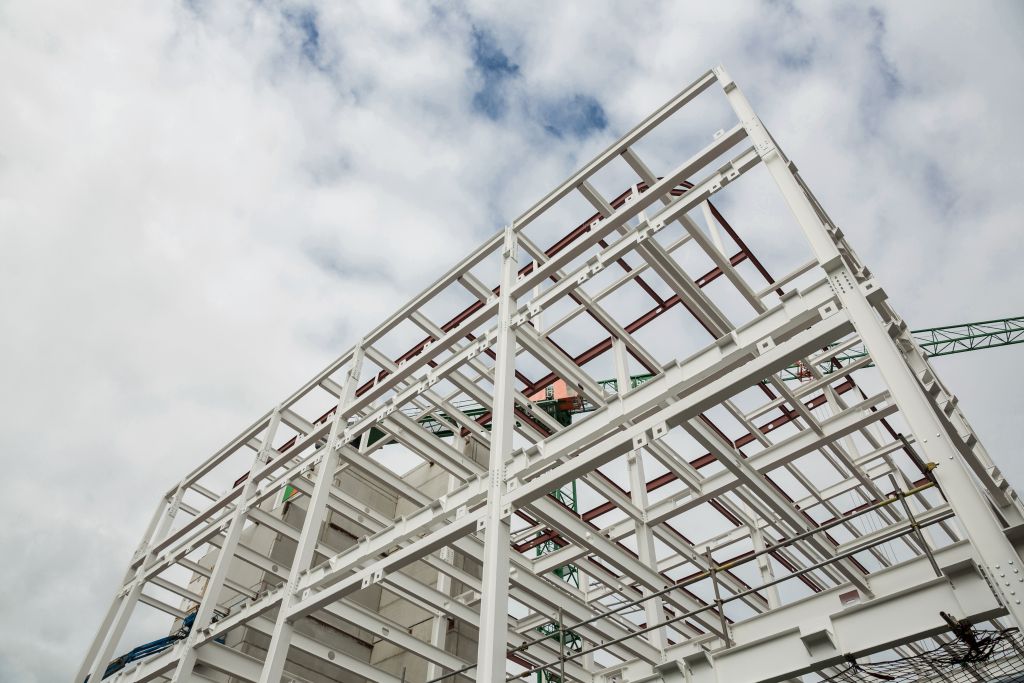
Cold-formed steel framing manufacturer in Canada options are growing, but the quality and lead time you get from a manufacturer with local expertise makes a real difference on the job site. 

Whether you are framing a single-family home or a multi-storey building, the case for steel is straightforward: it is stronger, safer, more consistent, and built to last through everything the Canadian climate throws at it.