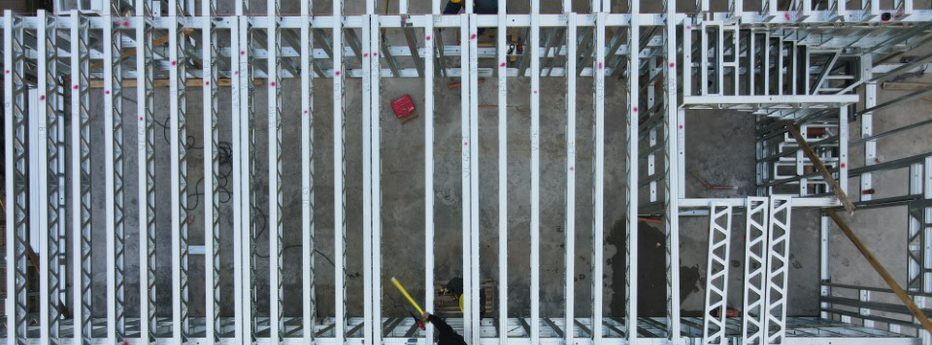
We Provide a Comprehensive Range of Floor and Ceiling Components, Covering Everything from Basement Flooring to Ground Ceilings.
LSF FLOORING
The UK Light Steel Frame Association (lsf-association.co.uk) describes LSF flooring as:
LSF components are used to form structural floors in load-bearing structures. LSF floors can also be used in volumetric modular construction where floors are formed from a double deck system of a floor and ceiling combination. Refer to Section ‘Components for Modular Construction’ later in this guide for more details.
Formed as either steel joisted floors or as composite concrete floors in ground floor applications if part of the LSF system, together with separating and intermediate floors. Joists are formed from galvanised steel plate up to 2.5mm gauge from joists at a maximum of 600mm centres. All floor types are underlined to provide fire and acoustic performance and overlaid with a floor finish.
Loads that need to be accommodated vary when used in either domestic, commercial or communal areas. Corridor floors are often designed using a shallower depth as the span is reduced but increased loads need to be accommodated. Enhancements are required to the floor build-up such as floating floors and acoustic ceilings to achieve the acoustic performance. Refer to Section ‘Elements Used in Conjunction with LSF’ in this guide for more detail. LSF manufacturers and lining board providers have fully tested load-bearing floors to BS EN 1365-2.
When designing floors to be used in LSF structures it should be noted that:
- Early identification of any elements that may add loads to the structure and any penetrations that may be required within structural elements to accommodate services etc. This early design input is essential to avoid cutting additional holes in to studs post installation.
- When LSF structures are used to form ground floors the protection to the steel will need to be increased and the level of galvanisation may also need to be increased. Some warranty providers may require the steel to be kept a minimum of 150mm above external ground level.
- Ground floor components should be kept warm, insulated and membranes incorporated in line with the requirements of a condensation risk analysis.
Joisted floors
Floors are formed from using C section joists used in conjunction with a rim/channel section to create a floor which is either formed as a cassette or as loose joists. Joists are overlaid with a structural board which can be used to create a finished floor or as working platform that can be overlaid with a floating floor. Floor joists can also be overlaid with low-profile steel decks and screed over. The floors transfer horizontal loads from walls by plate action into the adjacent load bearing walls and the board overlaid creates a diaphragm action which provides structural stability to the floor. In addition, noggins are incorporated at mid-span of the floor to prevent the joists rolling. Penetrations in the joist provide a route for services to be incorporated without introducing a service void, but the penetrations through the ceiling need to be adequately sealed to ensure performance of the ceiling is maintained.
Composite concrete floors
Floors are formed from using profiled steel sheets which are completely site assembled and fixed to the load bearing walls. The floor deck is positioned onto the support channels and tie bars are included as required to provide connectivity in conditions of accidental loading. Anti-crack mesh may be placed on spacers before the concrete is poured, alternatively an appropriate fibre reinforced mix may be used.